Oxygen is Poorly Soluble in Plasma
페이지 정보

본문
Our editors will review what you’ve submitted and decide whether to revise the article. Oxygen is poorly soluble in plasma, so that less than 2 percent of oxygen is transported dissolved in plasma. The vast majority of oxygen is bound to hemoglobin, a protein contained inside red cells. Hemoglobin is composed of 4 iron-containing ring buildings (hemes) chemically bonded to a large protein (globin). Each iron atom can bind and wireless blood oxygen check then launch an oxygen molecule. Enough hemoglobin is present in normal human blood to permit transport of about 0.2 millilitre of oxygen per millilitre of blood. The quantity of oxygen certain to hemoglobin depends on the partial pressure of oxygen within the lung to which blood is exposed. The curve representing the content of oxygen in blood at varied partial pressures of oxygen, known as the oxygen-dissociation curve, is a characteristic S-form as a result of binding of oxygen to at least one iron atom influences the flexibility of oxygen to bind to different iron websites.
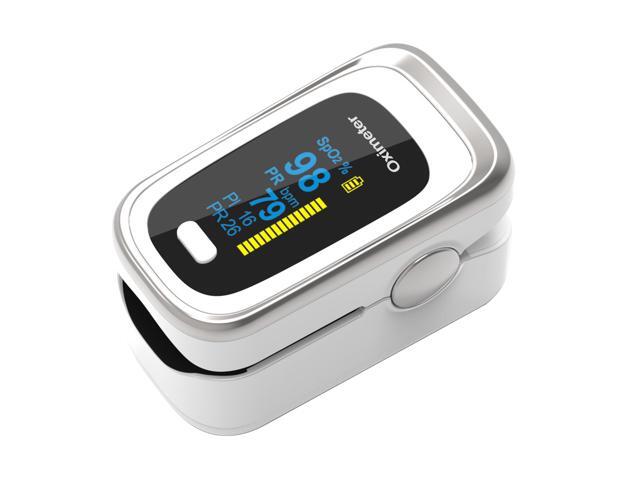 In alveoli at sea level, the partial stress of oxygen is ample to bind oxygen to primarily all accessible iron websites on the hemoglobin molecule. Not all the oxygen transported within the blood is transferred to the tissue cells. The amount of oxygen extracted by the cells depends on their rate of vitality expenditure. At relaxation, venous blood returning to the lungs nonetheless contains 70 to seventy five p.c of the oxygen that was current in arterial blood; this reserve is available to satisfy elevated oxygen calls for. During extreme train the amount of oxygen remaining in venous blood decreases to 10 to 25 %. On the steepest part of the oxygen-dissociation curve (the portion between 10 and forty millimetres of mercury partial stress), a relatively small decline within the partial stress of oxygen in the wireless blood oxygen check is related to a comparatively massive release of sure oxygen. Hemoglobin binds not solely to oxygen however to different substances akin to hydrogen ions (which decide the acidity, or pH, of the blood), carbon dioxide, and 2,3-diphosphoglycerate (2,3-DPG; a salt in pink blood cells that plays a role in liberating oxygen from hemoglobin in the peripheral circulation).
These substances do not bind to hemoglobin on the oxygen-binding sites. However, with the binding of oxygen, adjustments within the structure of the hemoglobin molecule occur that have an effect on its potential to bind other gases or substances. Conversely, binding of these substances to hemoglobin impacts the affinity of hemoglobin for oxygen. Increases in hydrogen ions, carbon dioxide, or 2,3-DPG lower the affinity of hemoglobin for oxygen, and the oxygen-dissociation curve shifts to the suitable. Because of this decreased affinity, an increased partial strain of oxygen is required to bind a given quantity of oxygen to hemoglobin. A rightward shift of the curve is thought to be of profit in releasing oxygen to the tissues when needs are nice in relation to oxygen supply, as happens with anemia or extreme train. Reductions in regular concentrations of hydrogen ions, carbon dioxide, and 2,3-DPG end in an elevated affinity of hemoglobin for oxygen, and the curve is shifted to the left. This displacement increases oxygen binding to hemoglobin at any given partial pressure of oxygen and is thought to be useful if the availability of oxygen is diminished, as occurs at extreme altitude. Temperature changes affect the oxygen-dissociation curve equally. An increase in temperature shifts the curve to the right (decreased affinity; enhanced launch of oxygen); a decrease in temperature shifts the curve to the left (elevated affinity). The vary of body temperature often encountered in people is relatively slender, so that temperature-associated changes in oxygen affinity have little physiological significance.
Issue date 2021 May. To attain highly accelerated sub-millimeter decision T2-weighted practical MRI at 7T by creating a 3-dimensional gradient and spin echo imaging (GRASE) with inner-volume choice and variable flip angles (VFA). GRASE imaging has disadvantages in that 1) ok-area modulation causes T2 blurring by limiting the number of slices and 2) a VFA scheme leads to partial success with substantial SNR loss. In this work, accelerated GRASE with controlled T2 blurring is developed to enhance a degree unfold function (PSF) and temporal sign-to-noise ratio (tSNR) with a large number of slices. Numerical and experimental studies have been performed to validate the effectiveness of the proposed methodology over common and VFA GRASE (R- and V-GRASE). The proposed technique, whereas achieving 0.8mm isotropic resolution, functional MRI compared to R- and V-GRASE improves the spatial extent of the excited volume up to 36 slices with 52% to 68% full width at half maximum (FWHM) discount in PSF but roughly 2- to 3-fold imply tSNR improvement, thus leading to increased Bold activations.
We successfully demonstrated the feasibility of the proposed methodology in T2-weighted purposeful MRI. The proposed method is particularly promising for cortical layer-specific functional MRI. For the reason that introduction of blood oxygen degree dependent (Bold) contrast (1, 2), useful MRI (fMRI) has grow to be one of many mostly used methodologies for neuroscience. 6-9), through which Bold results originating from bigger diameter draining veins might be significantly distant from the precise sites of neuronal exercise. To concurrently obtain high spatial decision while mitigating geometric distortion inside a single acquisition, inside-volume selection approaches have been utilized (9-13). These approaches use slab selective excitation and refocusing RF pulses to excite voxels inside their intersection, and limit the sector-of-view (FOV), by which the required variety of part-encoding (PE) steps are lowered at the identical decision in order that the EPI echo practice length becomes shorter along the phase encoding route. Nevertheless, the utility of the interior-volume based SE-EPI has been limited to a flat piece of cortex with anisotropic resolution for overlaying minimally curved grey matter area (9-11). This makes it difficult to seek out functions past major visible areas particularly within the case of requiring isotropic excessive resolutions in different cortical areas.
댓글목록
등록된 댓글이 없습니다.